History Has Been Woven by a Stick — The Astonishing Drop Spindle

As mentioned in the previous post, I am completely flabbergasted by the importance of the drop spindle in over 10,000 years of human history.  The spindle was the only tool for spinning threads and yarns to make everything on earth ever made from fabric or cloth, up until recent history (read more here about the history of the spinning wheel).

WOW! This is the tool that spun the world!

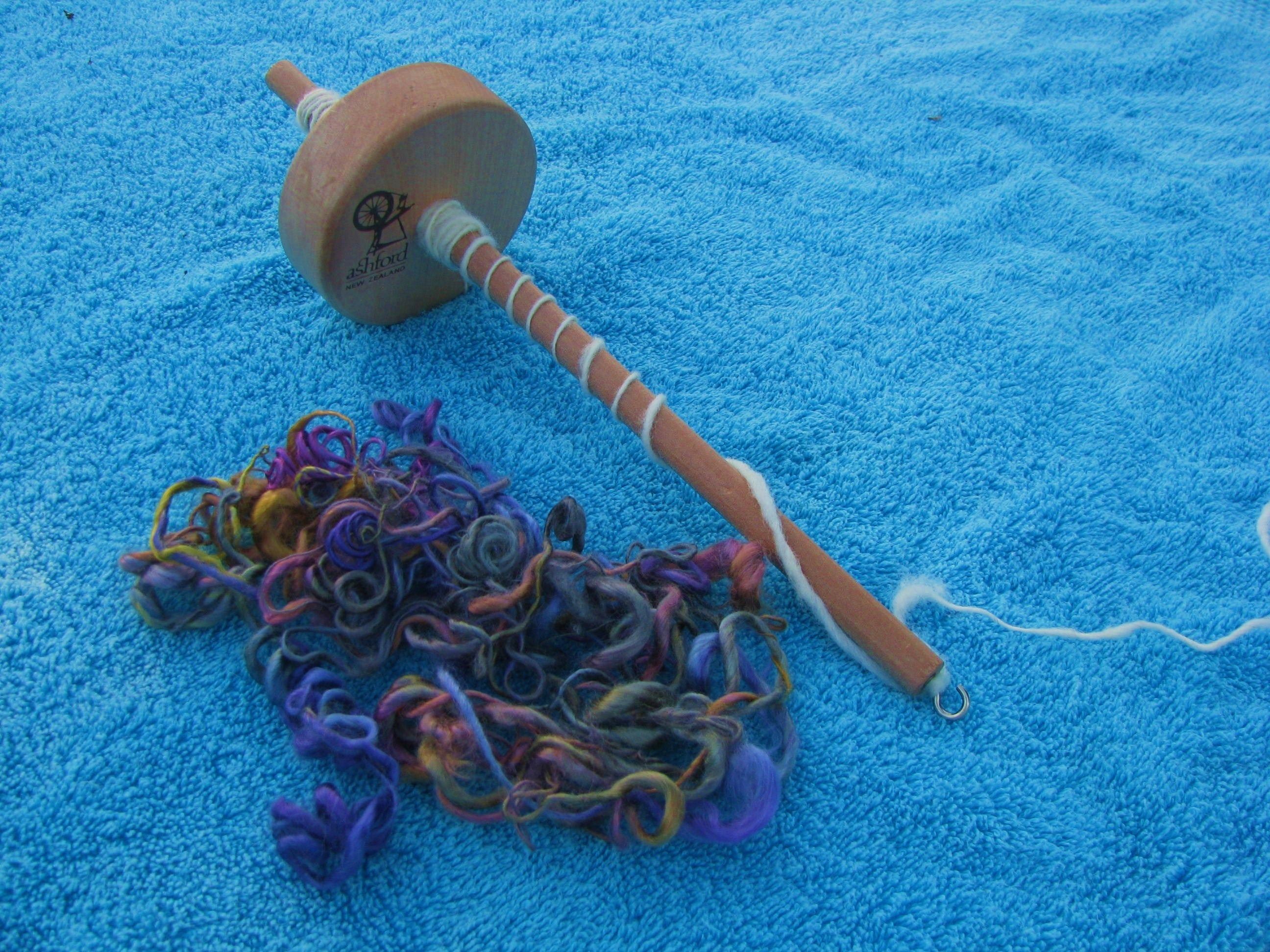
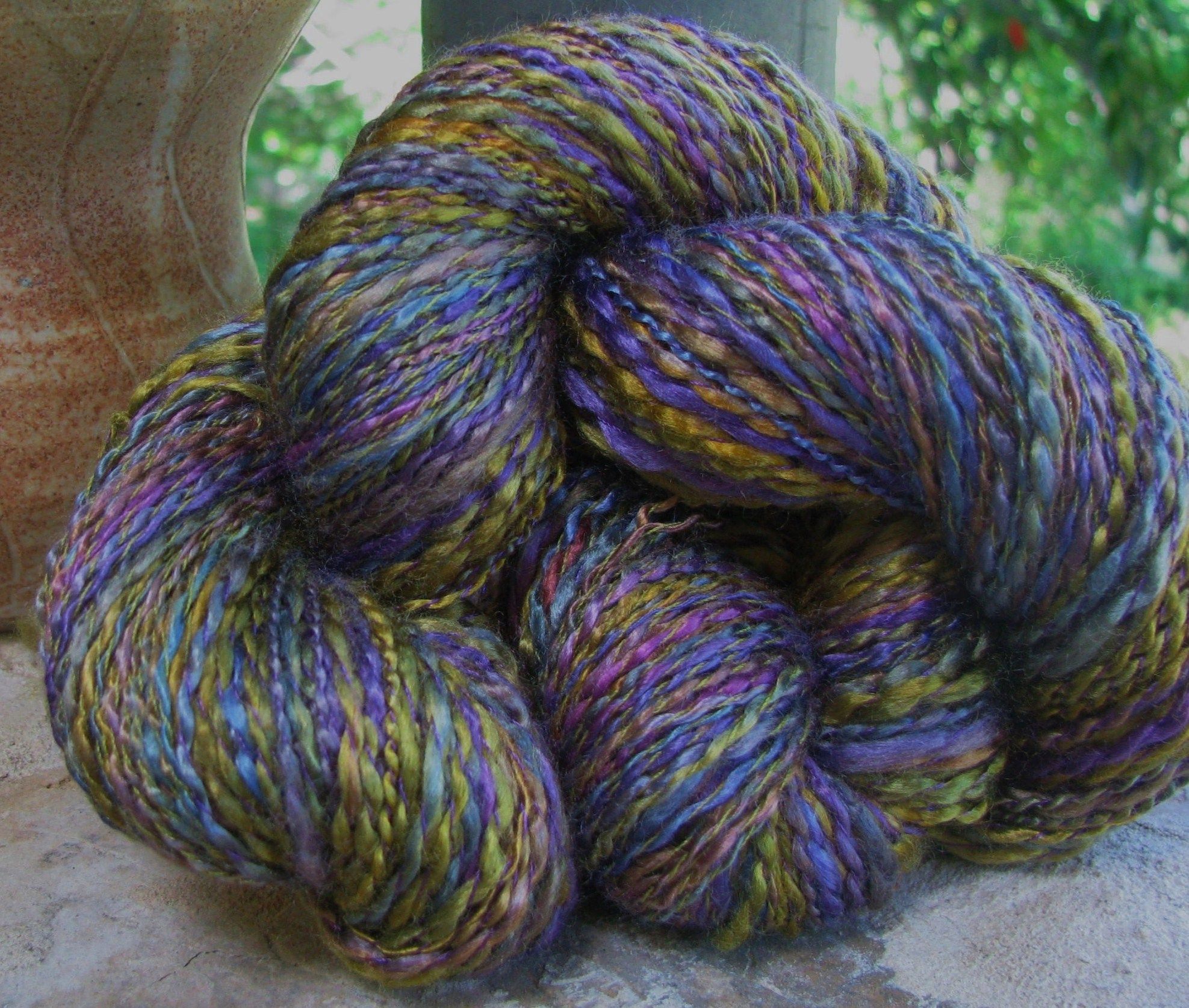
Here is a picture of a drop spindle and some beautifully dyed bamboo yarn that MonChere purchased as her first experiment into spinning.

She spun amazingly well, as I’ve hear that bamboo is not easily spun!

But now you can see how basic and simple the spindle is, and if you weren’t flabbergasted before, I hope you are now.  Otherwise, you might be completely overtaken with the mundane-ness of buying your clothing at the store and need a shake up. Or you might be dead.

MonChere gave the unspun bamboo to Arabella to spin on her wheel, and here is the delightful result (Arabella is quite the spinner).

The “Modern” Spinning Wheel?

Because we live in a time when clothing is simply something we grab off a rack in a store, we’ve lost appreciation for what it takes to make fabric or cloth of any kind.  We rarely think of it at all–unless we were raised in sewing homes, like me, where our mothers measured, pinned, and cut large batches of cloth into pieces they would sew into our tops, shorts and matching Easter dresses.  Or maybe you’ve admired a period costume in a film and given a nod to the past ideas of spinning or whatever else it took to make such things.  That was me.  Until I started spinning myself.  (Yes, it was only 2 weeks ago!)

My natural curiosity got to me and I started wondering about origins of spinning wheels, who invented what, and so forth.  So I dove in to take a look, and I am simply flabbergasted at what I have discovered. Flabbergasted.

The spinning wheel itself is actually a very modern device, and used in only about 8% of the time that humanity has been wearing clothes and making cloth.  The very first images and mentions of spinning wheels only date back a mere 760 years. Here are some key context points:  The Magna Carta was established in 1212, Marco Polo was packing for China in 1271, and the Vikings were settling down and raising sheep instead of pillaging. (Okay, these things seem old, I’ll admit, especially compared to the latest version of MicroSoft Windows.  But it’s only 800 years!  We’ve been wearing clothes a lot longer than 800 years!!)

So, I next had to ask:  What on earth was used prior to 1250, and the invention of the spinning wheel?

The fiber: animal wool or hair, fibrous plants such as reeds, bamboo & flax, and silk

The spinning tool: a spindle and a pair of hands

The fibers have stayed consistent throughout history and are an assortment of animal and plant fibers. A spindle is basically a stick (or bone or other hard material carved like a stick) upon which fiber is twirled to produce a “twist” while the fibers are also being slowly drawn apart.  The fibers “twist” into yarn, and if they’ve first been “combed” in the same direction, the fibers “twist” even more easily. That is spinning in a nutshell.  But what’s so astonishing is that for 11,200 years every piece of cloth or fabric or yarn or thread was produced by a pair of human hands on a stick.

Now aren’t you flabbergasted, too?

Fiber Farmers are Attracting Quite a Following

Jacob’s Reward Fiber Farm, located in Parker, Texas, is the first CSA Fiber Farm in the Southwest.  Though there are many, many fiber farmers in Texas and surrounding areas, Jacob’s Reward was begun specifically to be a co-op farm, utilizing the CSA (Community Supported Agriculture) Model.  Juniper Moon Farm (read this article on Susan’s farm in the Wall Street Journal) started it all in 2008, when Susan Gibbs came up with a brilliant twist on the existing model of alternative funding used by community produce growers–instead of “shares” of the food harvest, she offered “shares” of her upcoming fiber harvest for purchase.

Utilizing etsy.com and the very active blogging knitters and spinners communities, Susan spread the word and sold out of her shares quickly.  She’s been doing it ever since, and other fiber farms are following in her footsteps–in the Southwest, that’s Cindy and Jacob’s Reward Farm.

I am fascinated! I hope to visit Jacob’s Reward Farm next week — Cindy not only sells “shares” of the fiber harvest, but also invites you “to share in the life of the farm”  through all sorts of fiber classes at the Little Red Barn.  You can read about how Cindy and her family got started with their fiber farm here.

A Harvest of Fiber

A fiber farm…of course! It makes complete sense. Food farmers harvest food, and fiber farmers harvest fiber from the many, many animals that grow fuzzy coats and beg to be shorn each spring.  Just like food farming co-ops bring the eaters closer to the source of the food they eat, fiber farming co-ops bring the spinners, knitters, and weavers (among others!) closer to the source of the fiber they are spinning, weaving, knitting and possibly wearing (maybe–if I ever get the buttons attached).

I am Fiber, hear me roar!
A proud participant in fiber farming.