
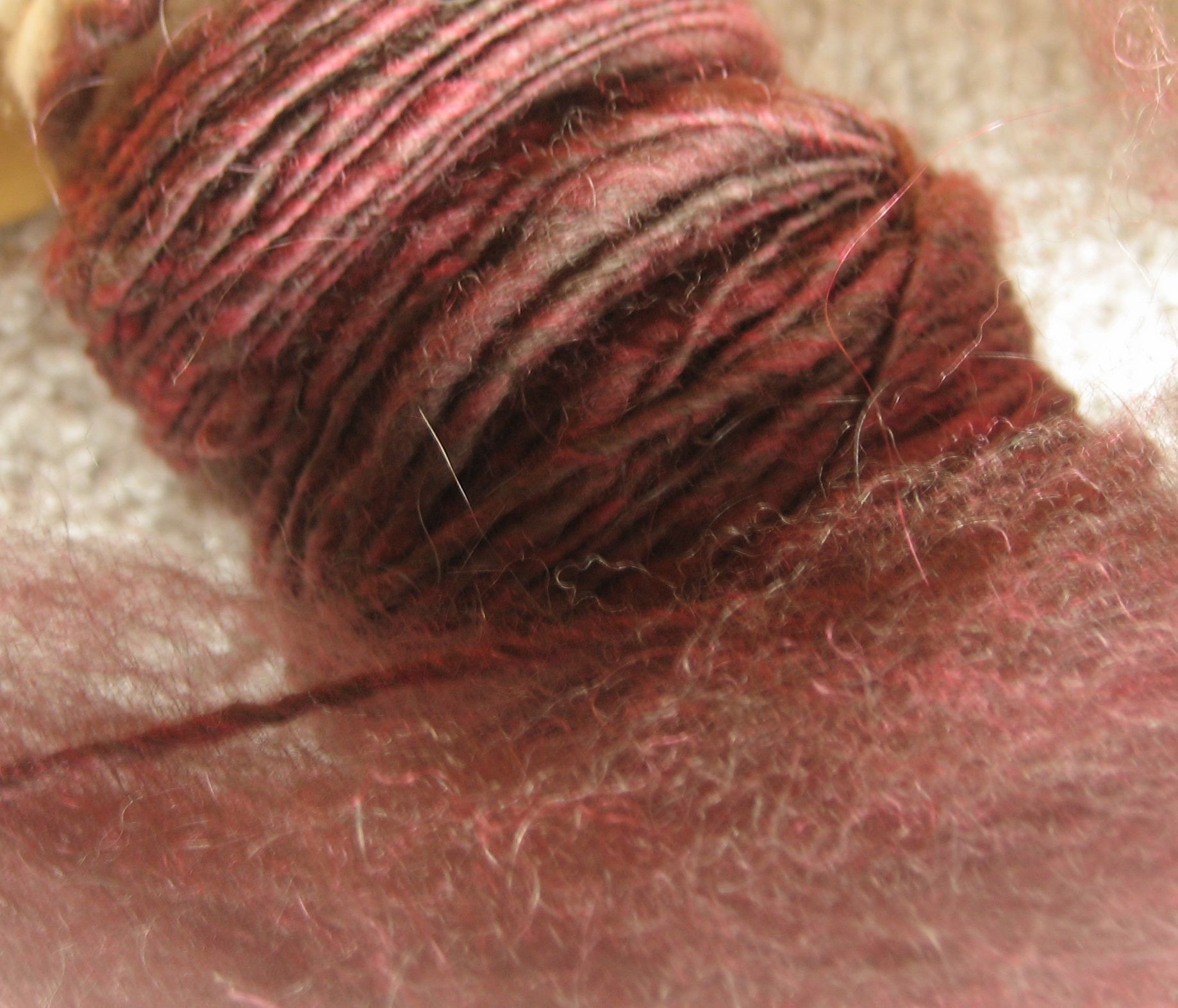
Here are pictures of the first yarns I have spun since beginning 8 weeks ago. I have no idea what to do with the yarns now, but the joy of spinning them will not soon leave me!


Here are pictures of the first yarns I have spun since beginning 8 weeks ago. I have no idea what to do with the yarns now, but the joy of spinning them will not soon leave me!
I’m not sure how long it will take me to get over being flabbergasted at the discovery that the spinning wheel is modern compared to the length of time humanity has been wearing clothing. Which of course means that prior to the 14th century (12th in China) every length of thread or yarn on earth was spun with a spindle and a pair of human hands. Though trade centers probably developed very early in human history for cloth as it did for other necessities, still somebody had to take that wool or flax and turn it into usable thread and yarn.
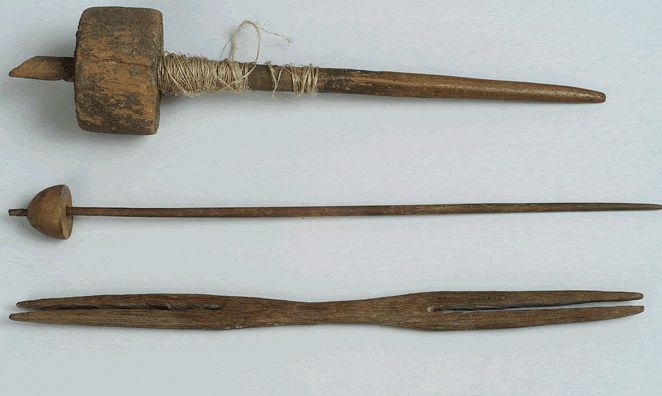
Pictured here are two spindles and a netting needle from ancient Egyptian finds. This is the tool that wove history! (Honestly now, aren’t you amazed??) I read recently that the Egyptians didn’t wear much wool; they mainly spun flax into linen cloth for clothing. But the tool remained the same across all cultures, whether you spun from sheep, goats, camels, buffalo or flax or silk.
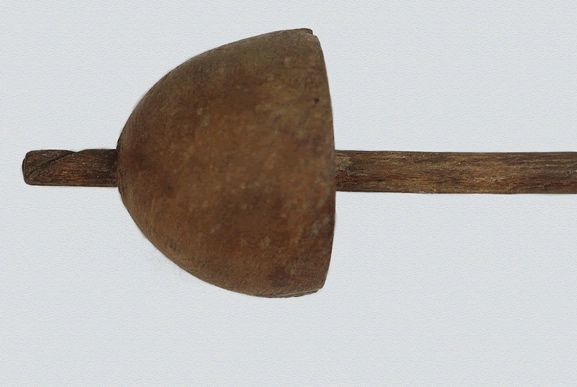
Notice the notch in the top of this spindle. This marks the place where the magic happens in spinning. Loose plant or animal fibers are held in one hand, and fed onto a device that “spins” the fibers, which causes them to grab onto each other and basically lock together. That is an astounding bit of physical science and physics all its own that we’ll get to one day!
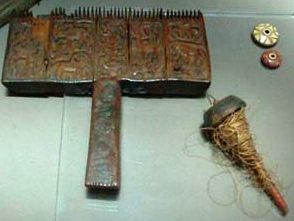
This photo was taken of a case in the Coptic Museum in Cairo, Egypt and shows an ancient carder, spindle, and two whorls (those round disks at the top). Carders were used to pull the fibers in the same direction to make spinning more efficient. The whorls were used on the spindle to change the thickness of the thread/yarn being spun by increasing or decreasing the amount of “spin” added to the fibers.
Hey, now the political practice of spinning makes a lot more sense! The aides are the “whorls” that control how thick or thin the cover stories need to be!
 I returned from a trip to Boston last night, and as I waited outside the terminal for my daughter to pick me up, I took out some knitting I had carried with me.
A mid-forties’ man walked by me and did a double-take. A huge grin spread over his face, and he said, “Now, that’s something you don’t see every day!” He nodded in my direction, and went on. He’s right, I thought. You really don’t see people with handcrafts in public much. Which of course got me thinking about a time when making your own garments was the only means you had of staying clothed. Now that’s a motivator!
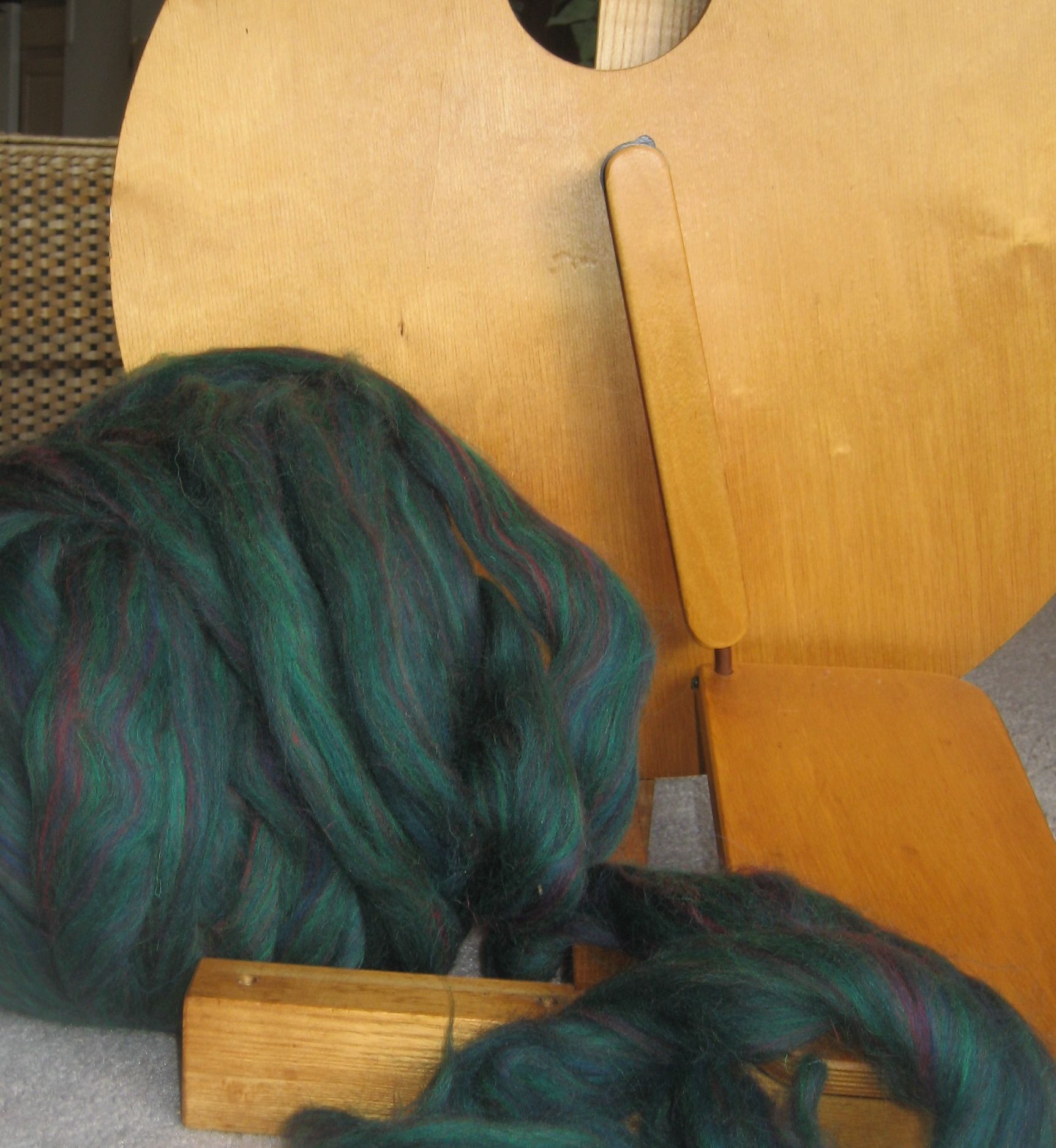 MonChere arrived on Sunday with a giant bag of roving that had been sitting in her closet, unspun, for 12 months. Her gift to me is not the roving itself, it’s the spinning of it!! I warned her that I am still a beginner, but she seems okay with that. I hope to give her back yarn as gorgeous as this roving.
I love this gift! I can’t wait to start spinning.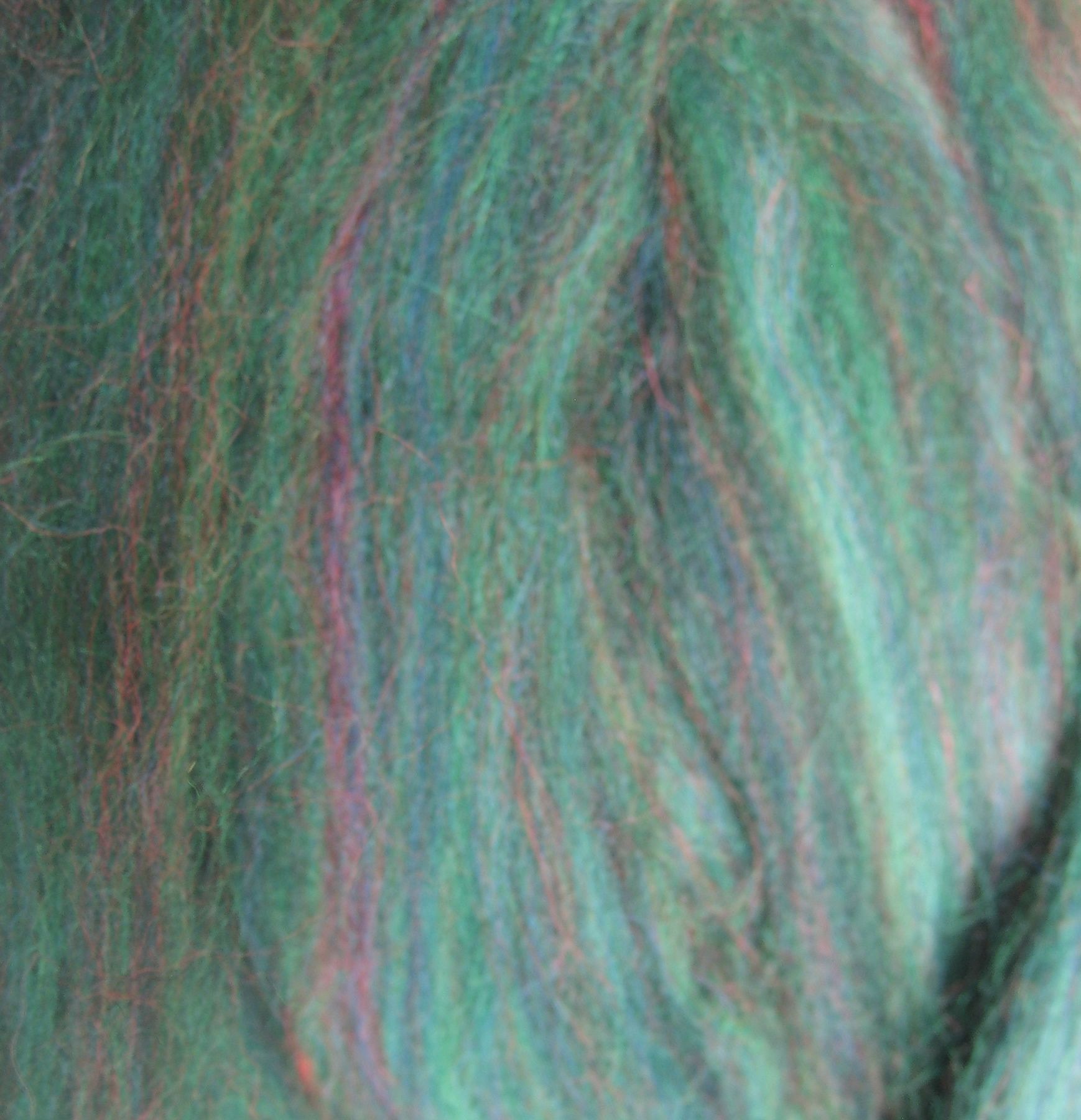
I had such a wonderful Mother’s Day weekend! My very own Louet wheel finally arrived from The Netherlands!
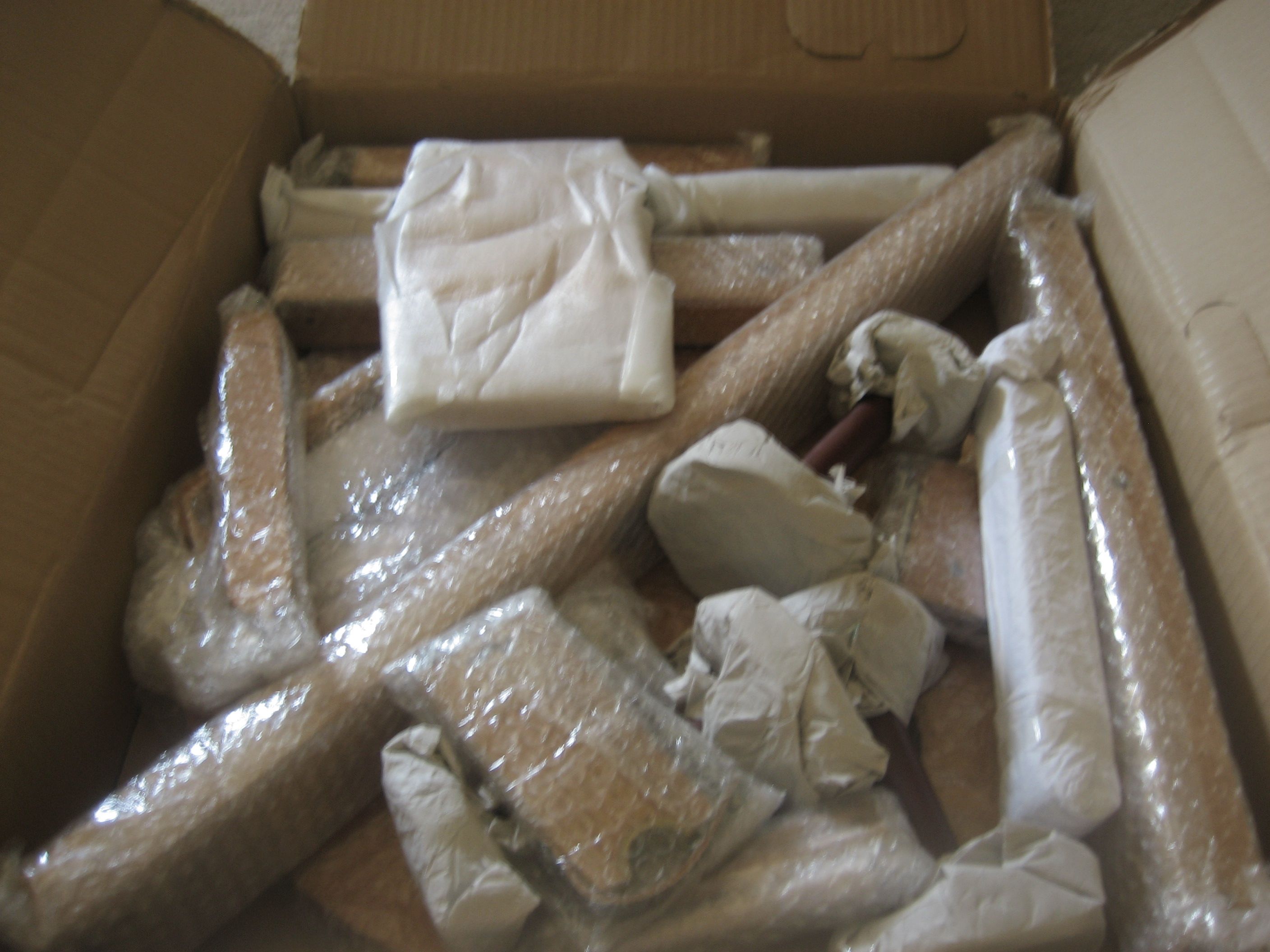

Thank you, Laurie and good son Hayden for helping me put it together!

Must stay safe driving home. 
I found a wonderful source at Wool Obsession for anyone trying to understand the various types of fibers available to spin and what they look like. You can compare flax to hemp, cashmere to mohair, and much more. The blog also lists current ebay auctions for the type of fiber shown.
As a new spinner, I am not only trying to learn about fiber types, but also the many different sheep breeds and their various wool characteristics. I thought Rambouillet was a poet? What do Targhee wool and Merino wool have in common? Good site for quick info and good auctions! (Hey, they even list Yak fiber!)

So what’s the big deal? I’ll tell you–a spinner takes a handful of loose, random wool from a farm animal, and turns it into thin strands of usable yarn, and now we can all wear clothes.

Okay, so it really hasn’t been a big deal for several hundred years, but for several thousand years before that, it was a very big deal!! A spinner was a magician of sorts.
Taking loose, random wool and making usable threads and yarns….How?? Actually it’s a pretty simple bit of physics. Spinning adds twist to the fibers such that they are locked together, and can no longer be drawn apart. Until the twist is added to the wool, it’s not usable as thread or yarn.
The spinner controls the drafting and the twisting with her hands—drafting with the back hand and controlling twist with the front hand. Drafting while spinning is the art of pulling the fibers to slide away from each other just the perfect amount to then add the twist you want to achieve the thickness of yarn.

This is the magic that happens between the two hands of a spinner.
Yeah, yeah, a modern spinning machine in a mill can spin faster with more guaranteed uniformity. But there is no magic in that.
Though some spinners prefer to spin directly from the batt, there are additional steps that prepare wool to be spun by the rest of us mortals. Each step in the process of preparing raw wool is designed to “organize the fibers” to make spinning easier. The batts that come off the carder have their fibers more aligned, and there’s more air between the fibers than there was in the loose fleece; however, the batts can still be very compressed. This can make spinning more difficult, especially for us newbies!
If you’ve bought a batt or two, and are having difficulty spinning, you can easily turn your batts into roving. Here’s how:
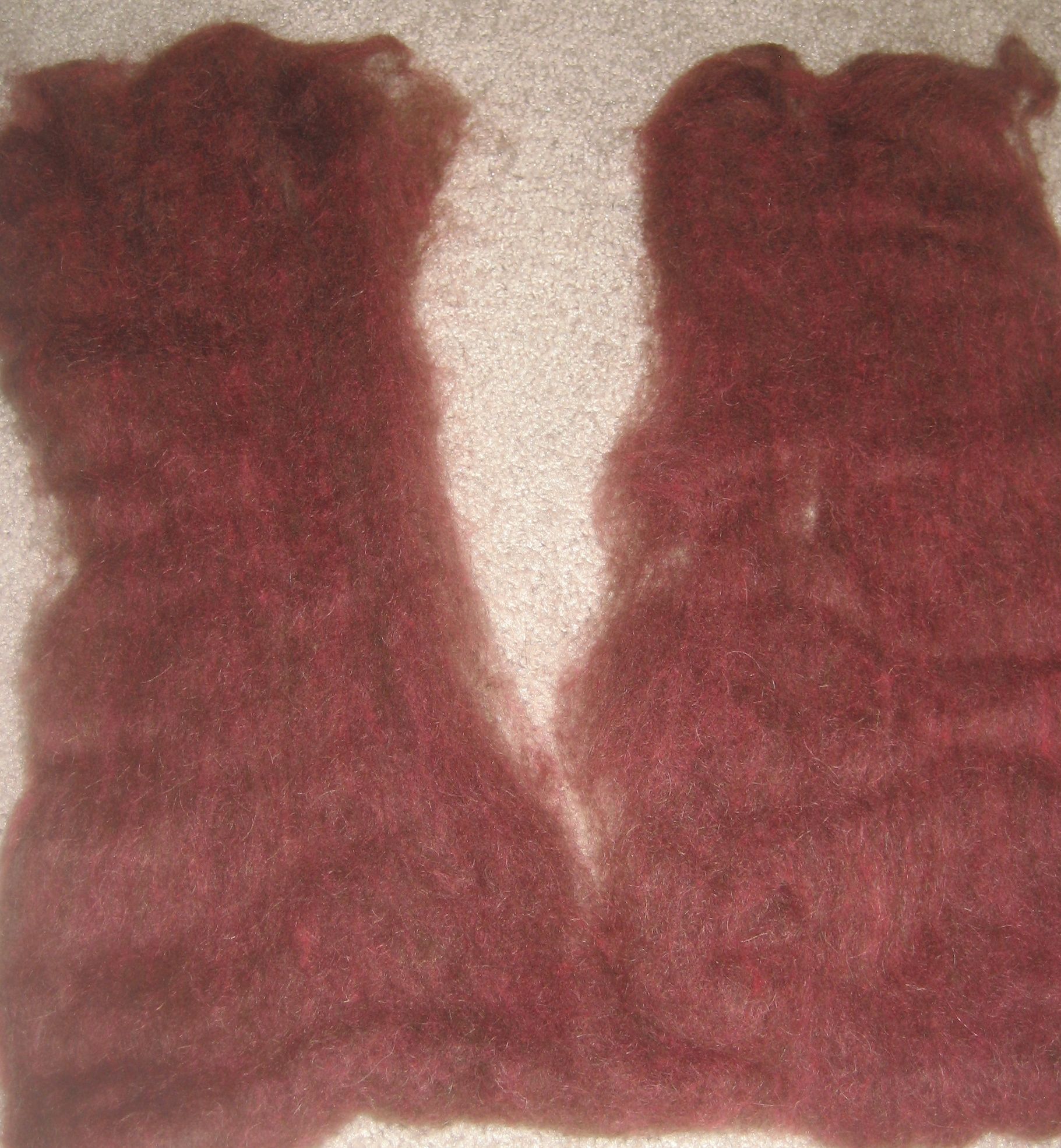
Divide the batt in half by pulling the fibers apart down the middle to the near edge, where you will leave a bit attached (about 1½”).
Next, turn the batt around so that the connected area is at the top, and on one side of the attachment, divide the batt again down to the other end where you will also leave a bit attached. Continue to turn the batt and divide, always leaving a bit attached at the end.
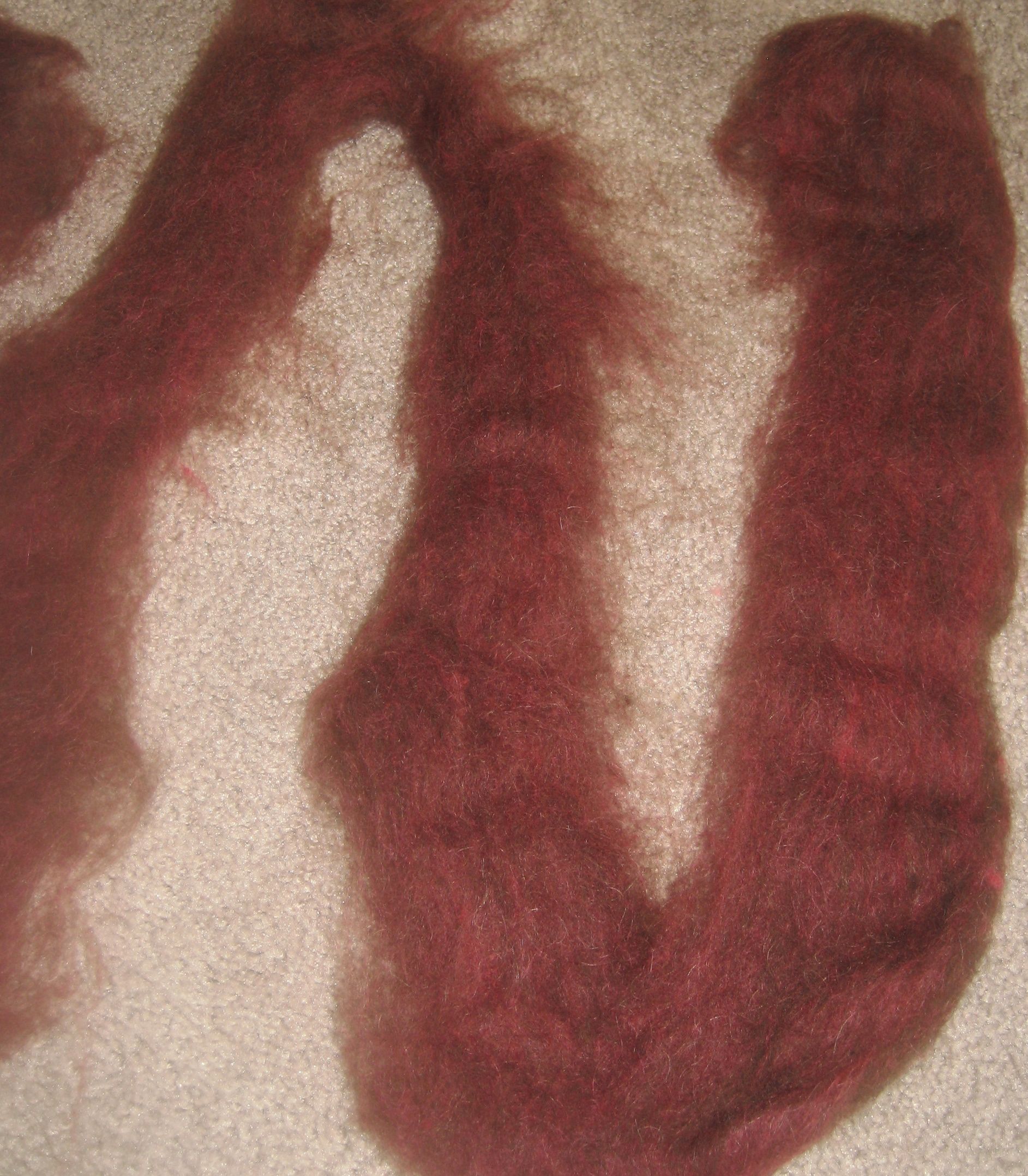
When you are finished with one side, go back to the middle of the batt and start on the other side. After the batt is separated into segments, straighten it out, smoothing and “drawing” the fibers into one length.
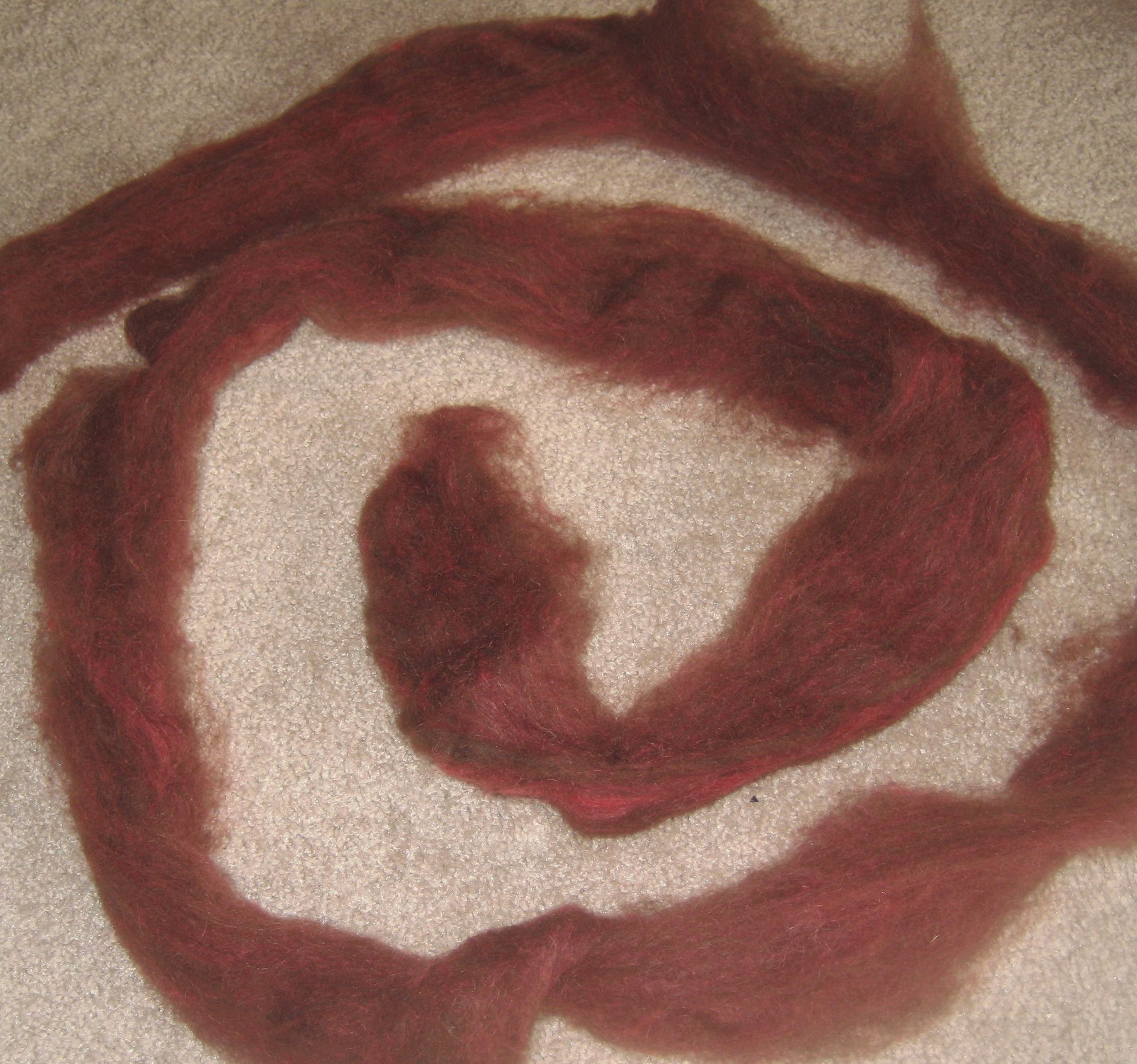
Drawing means just gently pulling the fibers to align them.
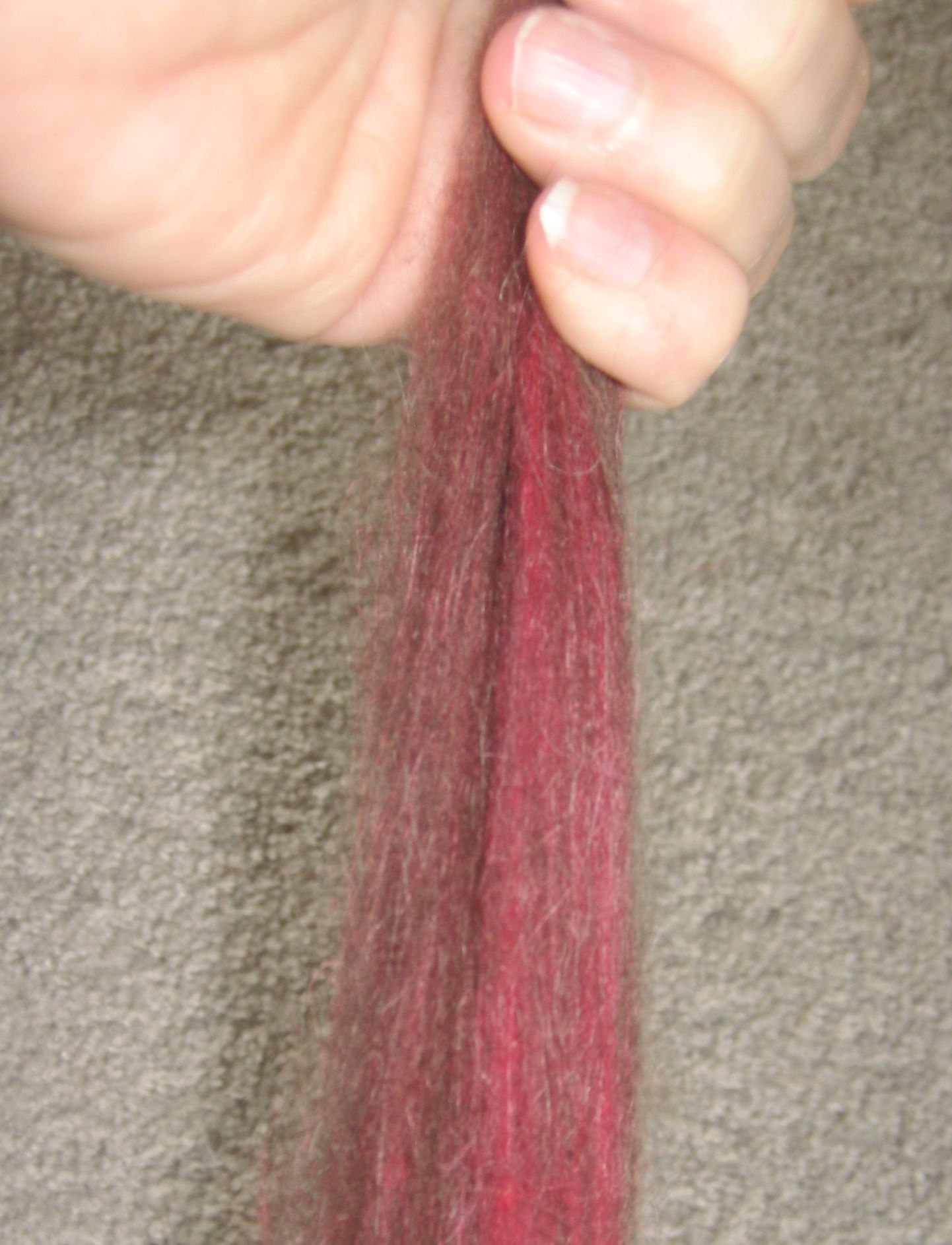
Now you’ve got roving! But this roving is still very thick for a new spinner. So take sections of the roving and draw (pull) them further apart, without separating the strands completely.
There are so many activities to synchronize for the new spinner that starting with thin, airy roving helps the process keep going!
Try this– you can very easily draw the fibers apart if you pull too firmly, because they simply slide past each other and separate.
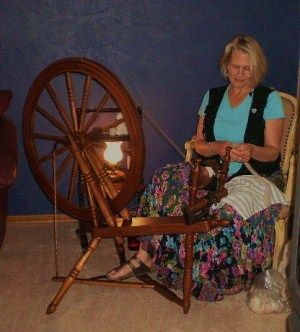
The first few times I spun with Arabella and the spinning class for 2-3 hours at a time, I was so utterly exhausted that I had to lie down when I got home. Spinning is a very sedentary activity, so how could I be this tired? It was my brain! My brain was exhausted!
Probably because while spinning, the brain is working at several different tasks at once, and you have your fingers, hands, feet, and eyes active in the

process. Your brain is processing, your eyes are carefully watching the fiber, your foot is treadling not too fast and not too slow, and you are drawing the fiber out between your hands and allowing or not allowing twist with your top hand, and then stopping the twist so you can feed the yarn onto the spool…..whew! It takes a while just to get the coordination down! But like riding a bike, spinning seems to be movement that our bodies intuitively know how to master.
So now, after a dozen or so collective hours of spinning, I am beginning to “get it.” Instead of just a jumble of actions and slippery wool moving or not moving through my fingers, my brain has started to isolate and understand each of the various tasks. I think this process is what will improve my spinning going forward. Isolating, and then focusing, on the different actions will produce different results in the yarn.
Here are some of the beginning actions to isolate:
I’m going over to Arabella’s to practice on her Louet spinning wheel. She says what I need now is “time at the wheel.”
 The Spinning Universe