Throwing Basics: Wall Consistency

It can be difficult to make good progress in any skill when you are self-taught. Going it alone does not provide opportunity for constructive criticism from other, more experienced potters. DVDs, books, YouTube videos and the occasional class have all been very helpful, but can’t really replace the rigor that exists in a program, or provide the oversight of an apprenticeship. What to do??

My chief concern is that I might be developing some bad habits in throwing that are only getting reinforced by more practice, and with no one present to tell me otherwise, I might actually be getting good a throwing badly. But a colleague of mine who also throws and actually did take ceramics classes at university told me about a practice of his professor that I’ve adopted.
facingforward

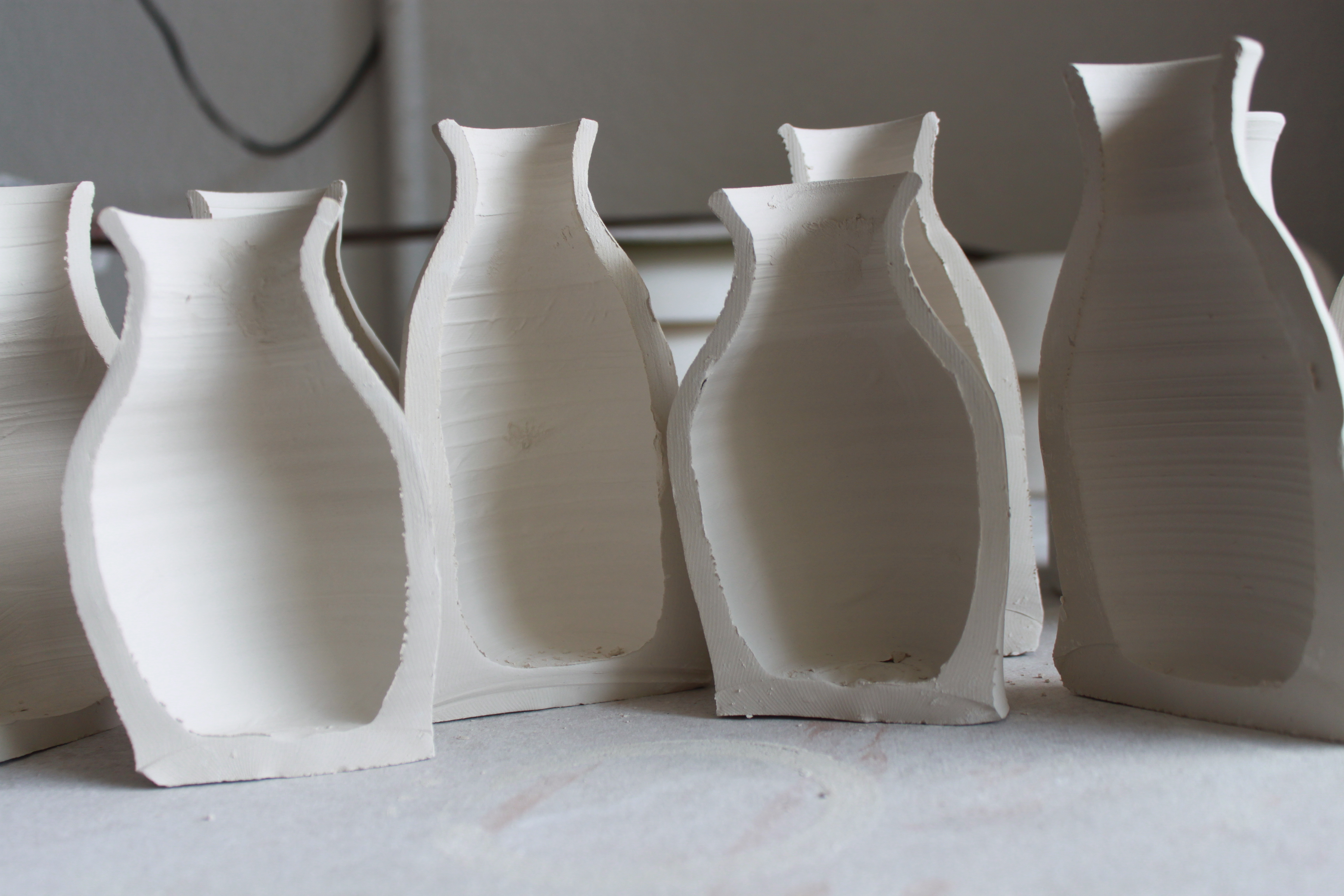
Cut everything in half.

It’s a great practice for a new potter for a multitude of reasons. First, you don’t get too attached to work that has emotional significance (look what I made!!) but little design or skill value. Second, it gives you tremendous insight into the part of the process you can’t see while throwing — what’s happening on the inside!

You simply can’t miss the giant chunk of clay that you aren’t moving up the form’s wall. You can’t miss the unevenness of the sides, or the too-narrow neck.claylumpskinny
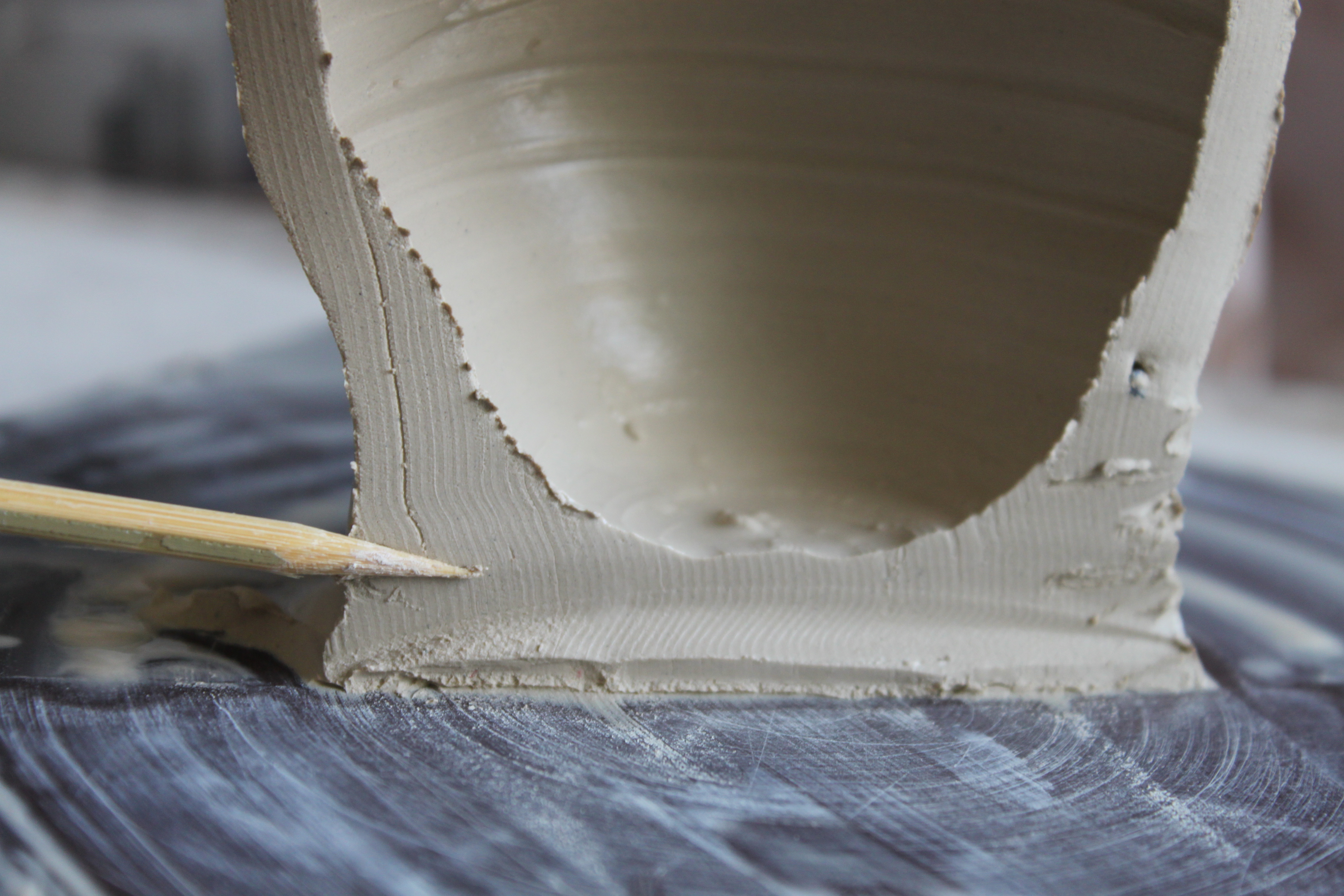
And third, watching yourself improve with practice is very empowering and inspires more practice. Remember, it takes hours and hours of effort to throw effortlessly.

Potter Hsinchuen Lin has a fabulous YouTube channel with very good instructional videos. I have learned quite a bit from watching them! In this one, he walks you through the process of lifting the clay into the walls of the pot. Watch this video, and then cut some of your pots in half to compare.

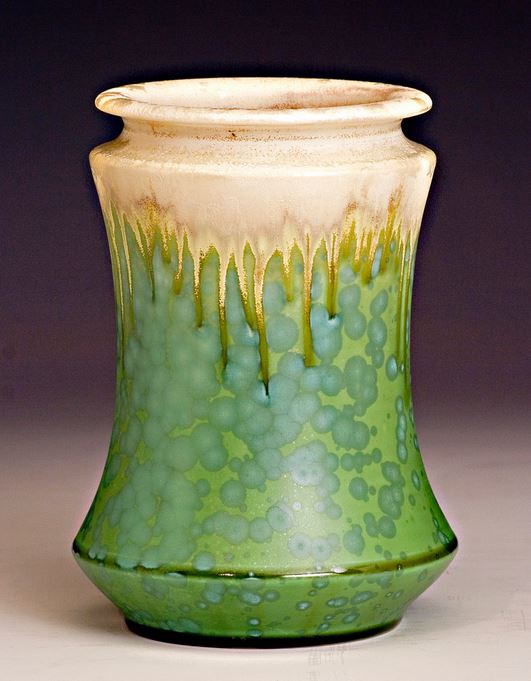
Samantha Henneke’s Glazes are Divine!

Just look at them!

Beautiful expression!
Samantha Henneke,  Bulldog Pottery, Seagrove, NC


I wrote previously about Harold Speed’s ideas about hidden rhythms and emotional significance in our creative expressions. Samantha and her husband, Bruce Gholson, work collaboratively concocting these dreamy glazes, and I think their work is a fine example of Speed’s ideas.

Speed believed that the appeal of a work depended upon the artist’s ability to capture truth and naturalness in their work. I believe this is so because universal themes and truths draw us in every art form, whether they are present in literature or the visual arts.

Samantha Henneke
Samantha Henneke, Bulldog Pottery, Seagrove, NC

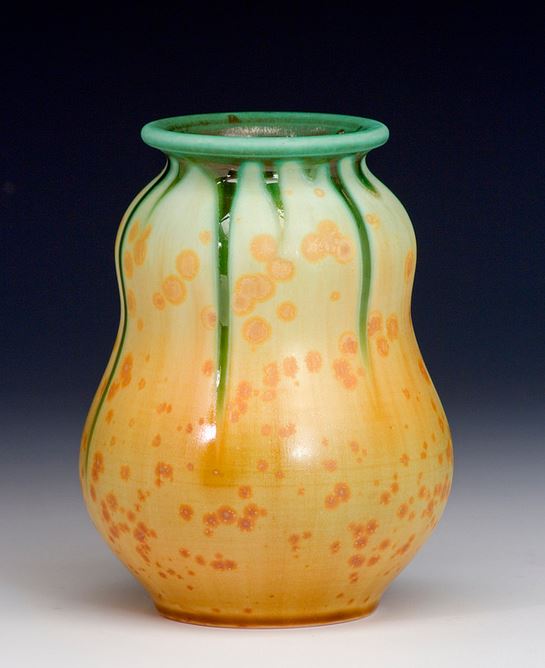
With exquisite forms and amazing glazes, Samantha Henneke’s work is certainly arresting (Speed’s term) and appealing. Really, I am a bit awestruck by her colors and layering. Samantha gives equal credit to Bruce for their work in creating amazing glazes. She says their entire studio is a collaboration. WOW, amazing creativity, and a love story as well! You rock, Samantha and Bruce! You can read their Blog and see more of their work. Be sure to check out Samantha’s amazing photos of insects.

Samantha.Henneke.Yellowvase
Samantha Henneke, Bulldog Pottery, Seagrove, NC
bruce.gholson.jug
Bruce Gholson, Bulldog Pottery, Seagrove, NC

Who’s Throwing Those Pots at You?

My mistake was in trying to make sense of a phrase by assuming it has always meant the same thing throughout history – Angus would say I had been applying a form of presentism when wondering about “throwing pottery.”

Is it called throwing because you slam the clay down onto the wheel head to secure it? Or because as a beginner you end up throwing away more pots than you keep? Or because the frustration of not producing a good pot on the wheel can cause you to throw the malformed objects across the studio?

Turn (Throw) the Wheel by Hand ...
Turn (Throw) the Wheel by Hand …

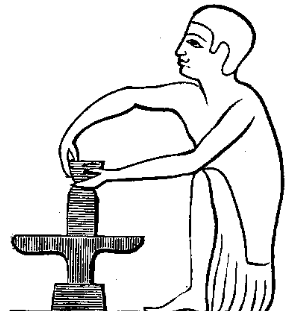
Nope. Not any of those. I finally decided to look up the origins of “throw” in the dictionary, and lo and behold, my presentism was revealed. While our current definition and usage of the word does involve flinging and hurling objects in a sudden forward motion, the original definition (according to Dictionary.com) and usage of the Old English word thrawen means “to twist or turn.” This, of course, makes perfect sense! The potter’s wheel turns!

Or Turned (Thrown) by Foot
Or Turn (Throw)        by Foot


This exercise is a good reminder not to attach our current viewpoints onto events or objects of the past, especially the distant past–because we tend to Make Stuff Up.

I’ve discovered some research material published by The Oriental Institute of the University of Chicago on ancient pottery found around Mesopotamia dating to 3000 B.C. How big of a weirdo am I that this is exciting to me because I can now add pottery to my Textile Timeline for Ancient History?

Endless Curiosity

I have inherited the investigative gene in my family, and while mostly just useful, it can sometimes get out of hand. Basically it means that when I find myself interested in a subject, I am like a dog with a bone, and can’t let it go until I am satisfied that I understand it. Right now, I have an endless curiosity about the natural world and its ability to provide for and sustain humanity—specifically, in two areas–with fiber spun into yarn and made into fabrics, and clay formed into vessels for use.

Cups and a water jug
Cups and a water jug still wet from the wheel

So I thought I’d just take you along with me as I try to satisfy this curiosity in my clay journey, just in case you were wondering about it, too.

This all started with my own increasing amazement of our natural resources. I don’t want to sound ungrateful. I deeply appreciate clean water, available food, antibiotics and other advances that have freed us—at least some of us, looking at the world in its entirety—from ills that have plagued humanity through the ages. But, I am fascinated by the dual nature of the natural world. I say “the dual nature” because the natural world is both beautiful in its simplicity to provide, and amazingly complex within that provision.

Take fibers, for example. Linen, flax, wool, cotton, silk—all of these various fibers grow and reproduce, and did so and would do so without any intervention from us. Because of their natural properties—the way a fiber is constructed so that when it is spun, because of its natural design, the fibers interlock, become stronger, and can be made into the myriads of articles we need.

Clay is much the same—abundant in nature, and of such a specific construction in its nature that it is the perfect material for creating vessels—pots, dishes, water jugs, insulators, and even panels on the space shuttle. Clay is another natural material with astonishing properties.

More Thoughts on Gains and Losses

I often think and sometimes write about gains and losses. In my life, globally, as God’s people, and even across the breadth of human history. Maybe especially across the breadth of human history, and specifically post-Industrial Revolution, when oh so many things have radically changed.

I suppose, as one who engages in centuries-old handcrafts, it’s only natural to compare the ancient and the modern. In any case, I just spent a wonderful weekend of creativity and learning at Mary Berry’s Fiber Retreat, and the whole experience brought me once again to these thoughts of gains and losses.

While I am quite glad that spinning wool for yarn and thread is my hobby and not a daily necessity (gain!), the weekend reminded me of the need to purposefully seek out groups that nurture us and foster excitement to learn and create. We can be so isolated in our lives (loss!), and the handcrafts that used to be so very necessary for survival and function are all automated now. Come to think of it, not just handcrafts, but so many other vocations have all been industrialized–from barrel-making to horse-shoeing to iron forging to silver smithing …the list could go on and on.

It’s the slow leaching out of daily creative efforts and the benefits we lose when that happens that gets me. And I do mean slow–such that we might not even notice. The progression has a frightening end, as we are now witness to and a part of — the elimination of the arts from school curriculum and the resulting general neglect of creativity and artistic expression. Which reminds me. Go see The Monuments Men, the WWII movie about the art scholars/architects who became soldiers and went to Europe to protect and restore stolen art. During the last year of the war, they recovered and then returned over 5 million pieces of art that had been stolen by Hitler and the Nazis. This movie will remind you how important art is to the world and to each of us.


The Creative Journey

Creativity is a fascinating concept. Once unleashed, you don’t know where it might take you. I’ve been fortunate to bear witness to my mom’s amazing creative journey since her retirement from teaching. I wrote about my mom’s creativity a couple years ago when I started this blog. I commented on the way being in her house  in the hill country makes me feel, because her artistic expression is everywhere. Read this post and you’ll see what I mean.

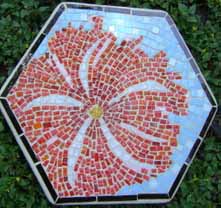
Since she retired, she’s been able to turn her attention full-time to her artistry. Her journey has fascinated and inspired me. She started making mosaic art pieces to place in her garden. It’s wonderful! Here’s one of her amazing stepping stones:

Tropical Flower
Gorgeous in the garden

Then she started making “waterers” for the garden–fabulous dishes that could supply water to the garden creatures:

Cactus Waterer
Drink!

Even she didn’t know that she was only beginning to discover her artistry. She bought a kiln (yes!) and started creating “Cottage Tiles” in her workshop, grouting them mosaic-style onto pots. Her work is original and inspiring to me, as I am on my own creative journey.

The Original Cottage Pot
The original cottage pot!
Turquoise Cottage Pot

This Crochet Pattern Looks a lot like Naalbinding

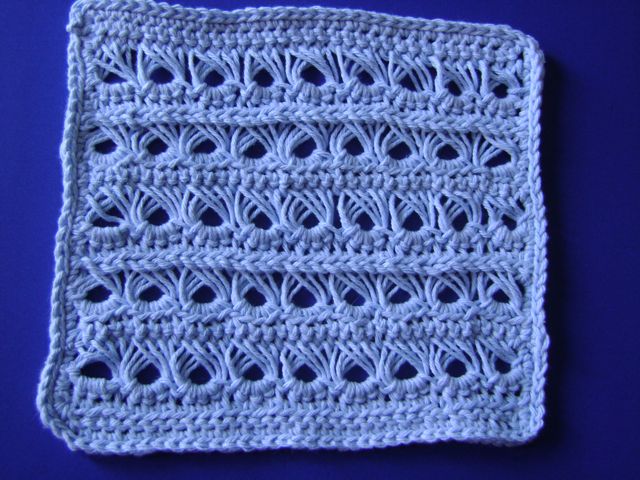
My mom sent me this picture of a very cute dishcloth she had crocheted. The pattern looks remarkably like ancient naalbinding, don’t you think?

Lacy Crochet Pattern for dishcloth

Here’s another picture up close:

Notice the loops

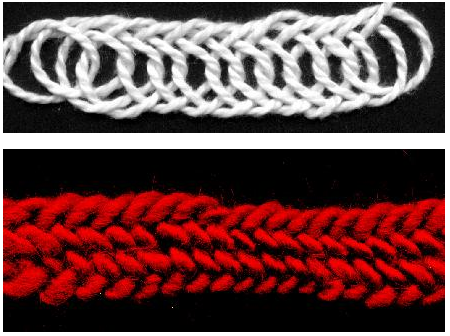
Now compare the above image to our samples of ancient naalbinding:

Notice the loops!

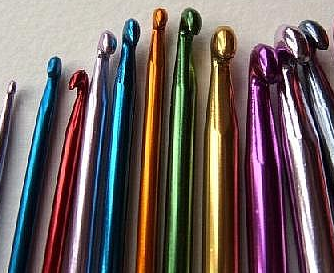
It makes sense, really. Naalbinding is perhaps the most ancient form of creating garments from yarn. The craft utilizes a large-eyed needle, which could easily have “morphed” into a crochet hook; both arts pull yarn through loops to create intricate and beautiful patterns.

Compare to Naalbinding Needles

What do you think?

You Don’t See That Everyday!

I returned from a trip to Boston last night, and as I waited outside the terminal for my daughter to pick me up, I took out some knitting I had carried with me.

A mid-forties’ man walked by me and did a double-take.  A huge grin spread over his face, and he said, “Now, that’s something you don’t see every day!” He nodded in my direction, and went on.  He’s right, I thought.  You really don’t see people with handcrafts in public much. Which of course got me thinking about a time when making your own garments was the only means you had of staying clothed.  Now that’s a motivator!