Sooner or Later…

Uh oh. I knew it would happen sooner or later. I have had about three days here by myself, with each child away on a different adventure, and no one needing anything from me. I thought I would be spinning for hours and hours, but the one thing that fascinates me more than actually spinning has captured me…researching about spinning!

It all started innocently enough…that curiosity got me wondering…What is the oldest textile that archaeologists have located? I mean, I just wanted to know when the first shirt was made. Really, that’s all.

But when my 20-year old daughter came into my bedroom yesterday, after my three days alone in the house, I’ll confess the room did look like that scene out of A Beautiful Mind, when John Nash’s wife walks into his office….(okay, there were some content differences….mathematical genius vs. curious spinning woman, left alone for three days…)

Scene from "A Beautiful Mind" taken from official movie website

But charts, diagrams, outlines, questions, and pages and pages of written notes were scattered all over my bed (my primary research spot), and a few pages with color-coded highlights were taped together and thumb-tacked to the wall. Josie walked in the room with a puzzled expression (Mom, have you lost your mind?). I found myself backpedaling to find a suitable explanation for all this…..what? all this…curiosity?

“Ummm…I had just been wondering about when people first made shirts?” ending with a question in my voice, hoping she’d accept the logic of one question leading to, well, all this.

Ah, the power of one question! When was the first shirt made? has taken me on a remarkable journey through the history of humanity, and the archeological, theological, scientific, and curious anomalies that accompany such a journey. (This whole line of questioning was begun after discovering the spinning wheel is a modern invention.)

Archeology is most fascinating–not only for what is dug up from the earth to tell us about people and their communities and habits–but also for the drama of pride, family feuds, hurt feelings, and ego of the scientists themselves, and their resultant actions. Like the famous Leakeys–the father, Louis, finds an astounding skull that might be the oldest human fossil….until young son Richard grows up and finds one that might be even older…and for 20 years, a dispute rages about the dates. Hmmmmm…

Or the scientist who made such bold claims about his find before they were verified, that his later embarrassment led him to keep the bones locked in a closet for many years, depriving the scientific community of the value they did hold. It’s riveting, truly.

Have I found the answer to my first question yet? No, I really haven’t. But I have discovered a bunch more questions….

Sign Me Up!

WordPress.com has added an easy feature (CLICK!) so you can keep up with The Spinning Universe’s Blog without even trying! Here’s a picture of the button (which is actually at the bottom of the page):

Cool New Sign Up Button--Click it down below

Scroll down to the bottom of this page to find the button, and click. You’ll receive each new post in an email. Thanks for reading!

On the Wheel: Heathered Silk (via SpaceCadet Creations)

WordPress.com has a new fun tool!!  It’s called the ReBlog–and this allows me to repost on my blog something I love on someone else’s blog….like this……ooooohhhhh, lovely, lovely silk, handspun by SpaceCadet…..I am still a beginner, a spinner-in-training-using-simple-wool, but one day I hope to graduate to this sort of beautiful silk! This post is from her blog, SPACECADET CREATIONS:

On the Wheel: Heathered Silk Beautiful sunshine and a lovely warm day, I sat in the dappled shade of the trees and spun silk into heathered shades of blue, green, and purple. Just before I finished and came in, the wind picked up and the skies transformed from blazing and blue to an angry dark grey.  A summer thunderstorm rolled in, and then ended as quickly as it started, leaving everything drenched but fresh again.  Perfect! … Read More

via SpaceCadet Creations

Who is Kate and Why is She Lazy?

The “lazy kate” on my Louet S10 looks like this:

S10 Louet and the lazy kate with bobbins

Lazy kates come in all shapes and sizes, depending on the brand. Many spinners make their own lazy kates from dowels and plywood.  The lazy kate is simply a way to store bobbins holding spun yarn, or to help in plying the yarn.

Singles on bobbins held by lazy kate, ready for plying

So I am wondering what did Kate do to earn such a bad reputation?  But I can’t find much information in the Google searches I have done.  I did find a poem by a young British poet named Kirke White, writing in the early 1800’s, and who died tragically young. His poem,  “Description of A Summer’s Eve” depicts what various individuals might be doing on a summer night, and in the poem’s second section, he writes:

“…And little Tom and roughish Kate are swinging on the meadow gate…Now they chat of various things…”

“…The mistress sees that lazy Kate, the happing coal on kitchen grate has laid–”

These lines are the oldest references (1809) I can find to Lazy Kate–though it might be just that the rhyming of the vowel sounds in “lazy” and “kate” are all that was needed to create this persona–poor Kate!

If any of you spinners out there know any other history of how Kate came to be so lazy, let us know!

From "Description of A Summer's Eve" Kirke White, 1809

Distaff Side of the Family?

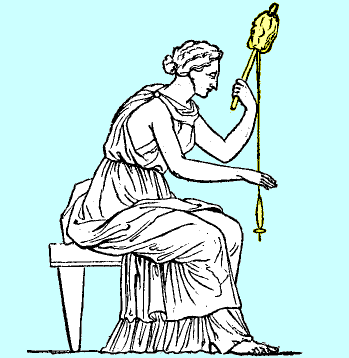
Roman woman spinning yarn with a distaff and drop spindle

It can be hard to grasp the fundamental importance of the act of spinning for our ancestors. Nobody currently alive in virtually any family in a developed nation has a memory of mother or grandmother spinning yarn for cloth to be used in their own household. Since people tend to gather in communities and develop trade, the practice of spinning your own yarn for cloth may have become a very distant memory. Even the Pilgrims arriving at Plymouth (1620) depended on the next ship to bring them cloth as they did not have room for spinning wheels (though wheels did arrive on subsequent ships).

Yet, daily spinning in homes was so important to the family for thousands upon thousands of years that the practice affected our very language. “Distaff” is an Old English word, originating at least as early as the 5th century in what is now England and southern Scotland. People, we are talking the 400’s here. We got Visigoths invading Italy, we got gladiators killing war prisoners and Christians, Augustine is writing The City of God, and women in homes are spinning, spinning, spinning the yarn for their household’s clothing.

Distaff & Fibers

Spinning was a daily task, unless you were very rich and bought your cloth or hired your spinners, or very poor, and couldn’t afford the wool or flax.

Oh, by the way, all that spinning was done on a hand-held drop spindle, as the spinning wheel wasn’t invented for another thousand years.

The word “distaff” is of course a replacement for whatever word represented the task in the previous language, because though the words may differ, the woman in the household spinning yarn remained a constant.  She was just represented by different words as the cultures and their languages moved around her.

Twisting Spindle

All of that is to say that women and spinning were so synonymous, that between the 5th and 14th centuries (400 AD to 1300’s) distaff was used to represent female-ness, as we use maternal today. The distaff side of the family is the maternal side (the spear side of the family is the male side).

This representation of maternal stayed with our modern English language well into the 1700-1800’s.

Image taken from:  William Smith, D.C.L., LL.D.:  A Dictionary of Greek and Roman Antiquities, John Murray, London, 1875., p. 565.

How to Ply Singles


Two-ply yarn

When I had finally spun some yarn I was proud of and discovered I was only halfway through the process, I was a bit alarmed. Darn it! Watching the spinners in my Wednesday class left me feeling that plying might be harder than spinning. More twist to control, more yarn to feed, and all while treadling in the opposite direction (that is, if I could remember to!) But, like spinning itself, we seem to know what to do with this action called plying. In time, the brain and hands coordinate, and we are plying away.

A single is just what the name implies–a single strand of spun yarn. Yarn is spun either with a Z-twist (your wheel spins clockwise) or an S-twist (your wheel spins counterclockwise). Both “twists” perform the action of locking

Two bobbins of singles on a Lazy Kate

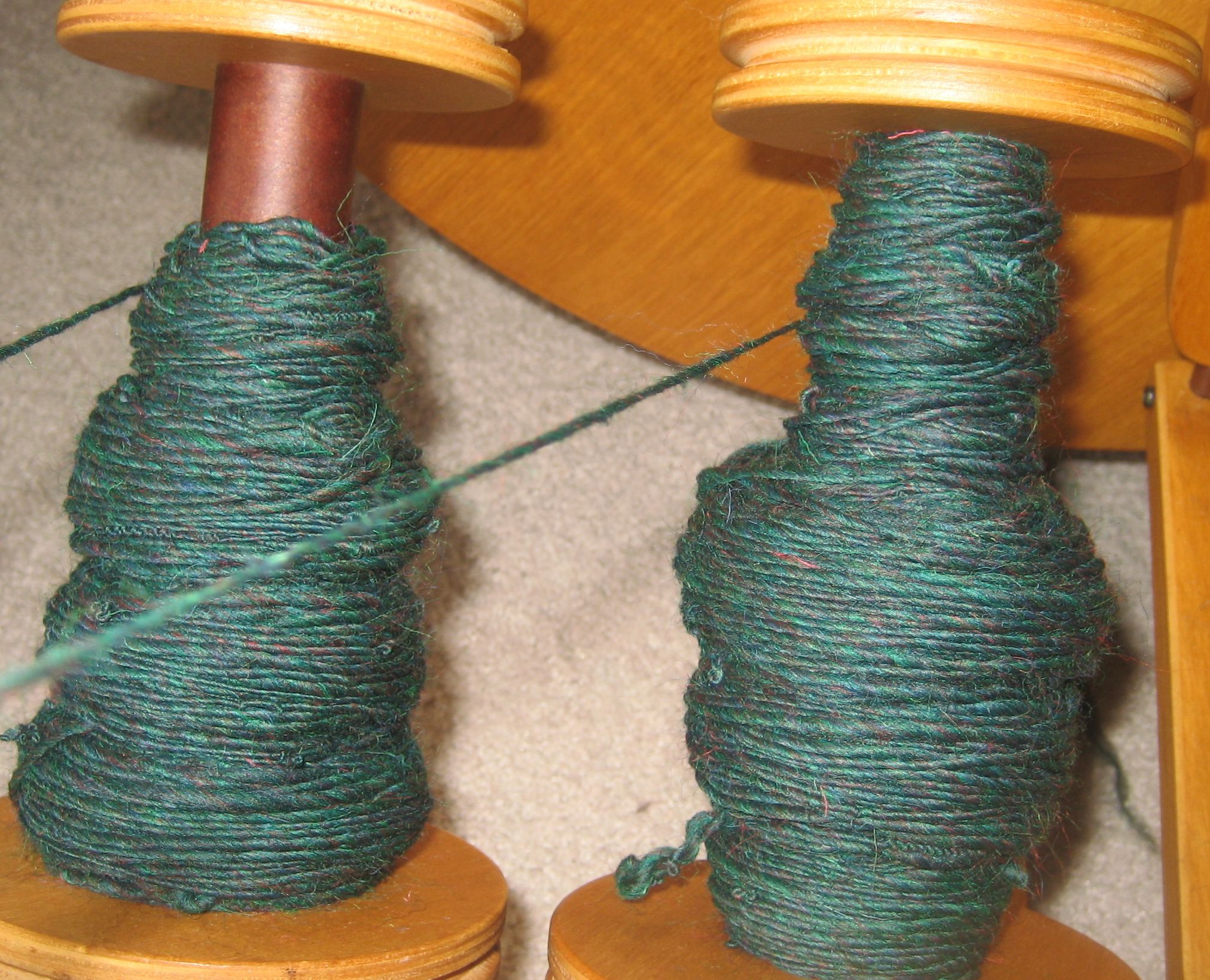
the wool fibers together into a stronger, now usable, strand. Singles are most often used in weaving, but rarely in knitting. Once you’ve spun two bobbins of singles, you can ply them from a lazy kate onto a third bobbin.

The important thing about all this is that you must ply in the opposite direction from which you have spun the singles. This is because the act of plying the singles in the opposite direction from which they’ve been spun “balances” the twist between the two singles. Plying in the same direction will just “undo” the twist and give you less stable yarn.

The singles twist together to make a 2-ply strand

Lastly, you must ply singles that have been spun in the same twist direction! Plying a Z-twist strand with an S-twist strand will just give you a big mess!

Arabella advised me to spin all my singles with my wheel spinning clockwise (Z-twist).  With this as the only standard for my singles, I can ply away without undoing the twist, or creating a mess!

Controlling the twist of the ply with your hand

First Yarns Put to Use!

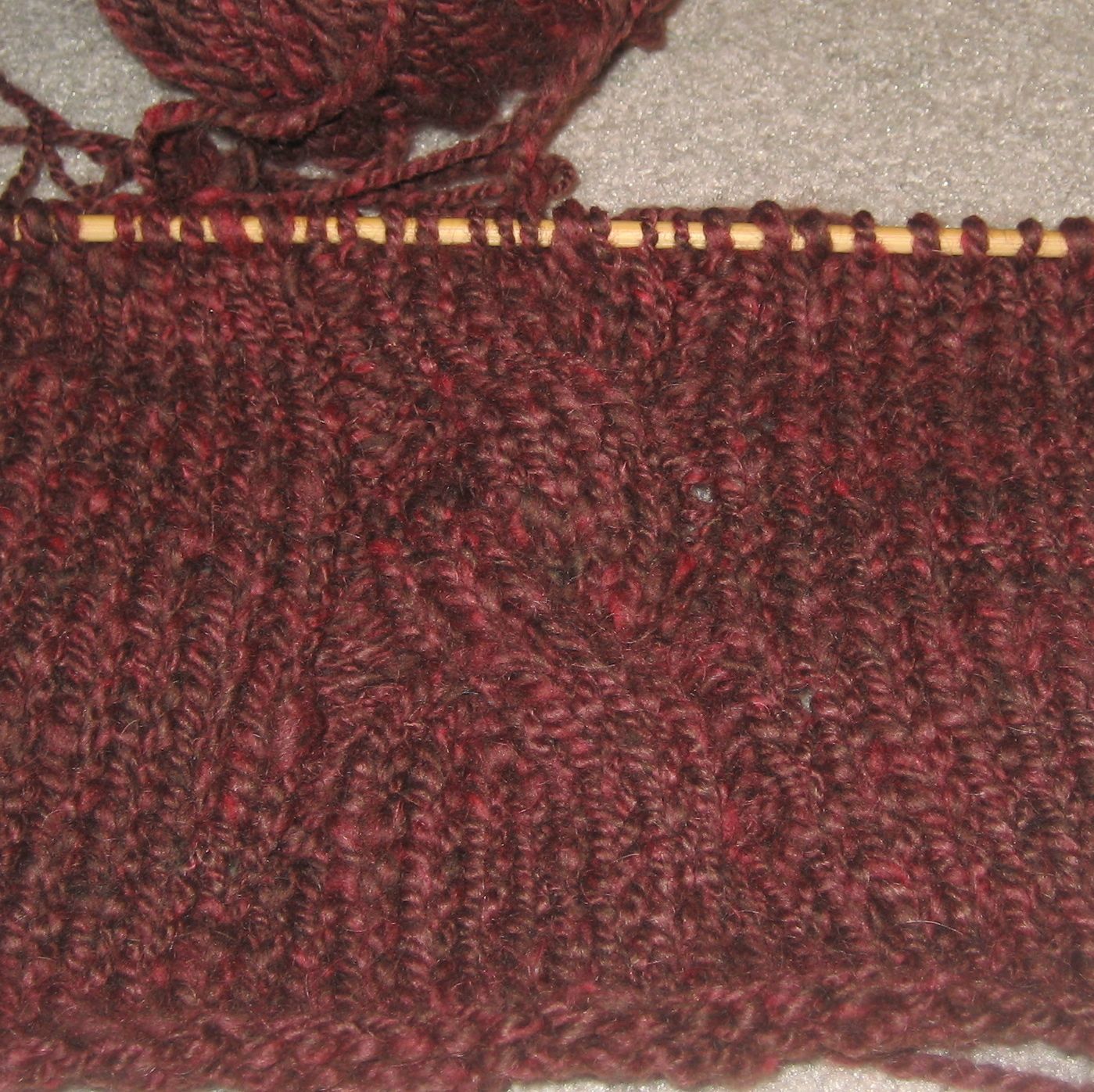
MonChere came over for a visit the other night, and began knitting up the reddish yarn I had spun recently.

"I need an identity!"

I am so glad!  This yarn needed to be made into something. It made me feel obligated, like I was somehow failing the yarn by not giving it an identity as a finished project. MonChere solved the problem.

I think we’re onto something here. I spin and spin, and then feel obligated to the yarn I’ve spun, having no clue what to turn it into. She has no interest in spinning, and sees finished items in the yarn, like Michelangelo and his stone.

"Ahhhh....."

Here’s a picture of the front of the bag–as far as she got during our visit.

International Fleeces–Meet Talia!

You simply must meet Talia Sommer of International Fleeces, and read how she began her business because of a mosquito, and her love of spinning. Her website is beautiful and informative, and she sells everything the spinner or fiber artist needs to dive into the wool and never come out!

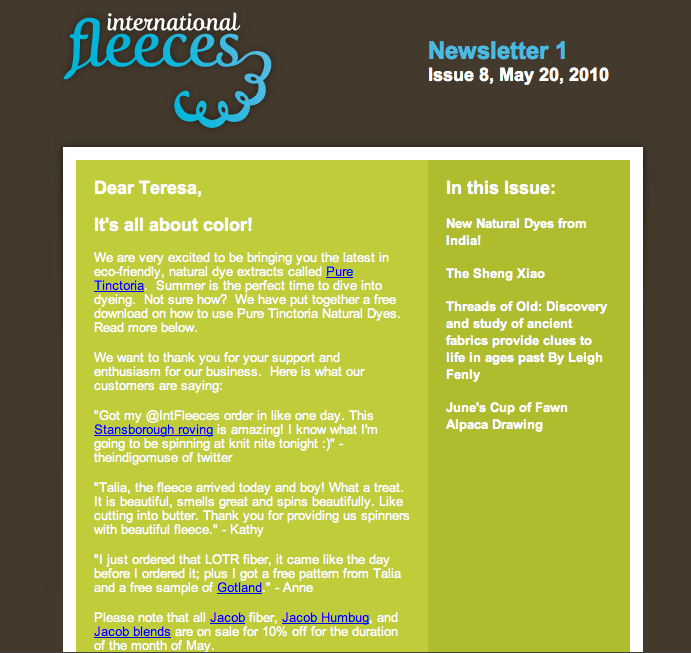
I am interested in natural dyeing techniques, and plan to do some of this over the summer. How providential that I received her newsletter today, promoting the joy of dyeing with natural dyes!

International Fleeces Newsletter

Her pricing is extremely reasonable, and she has a wide range of fibers (I cannot wait to get my hands on this baby camel and silk tussah blend at only $4 per oz.) Go visit her and sign up for her newsletter!

Talia also writes a very informative and well-researched blog. As a new spinner, I am learning the differences between the fibers–wool, plant fibers, blends, and what sheep was that?  Talia has a series in her blog of “Focus on Fiber” in which she gives great information on breeds, their history, and the characteristics of their wool. Interested in Merino, Jacob, Romney, or White Faced Woodland?

But mainly I like Talia for her story and her picture. Doesn’t she just look like someone you’d like to know? I think so.

Screen Grab of "About Us" with Talia

The Beauty of Functional Art

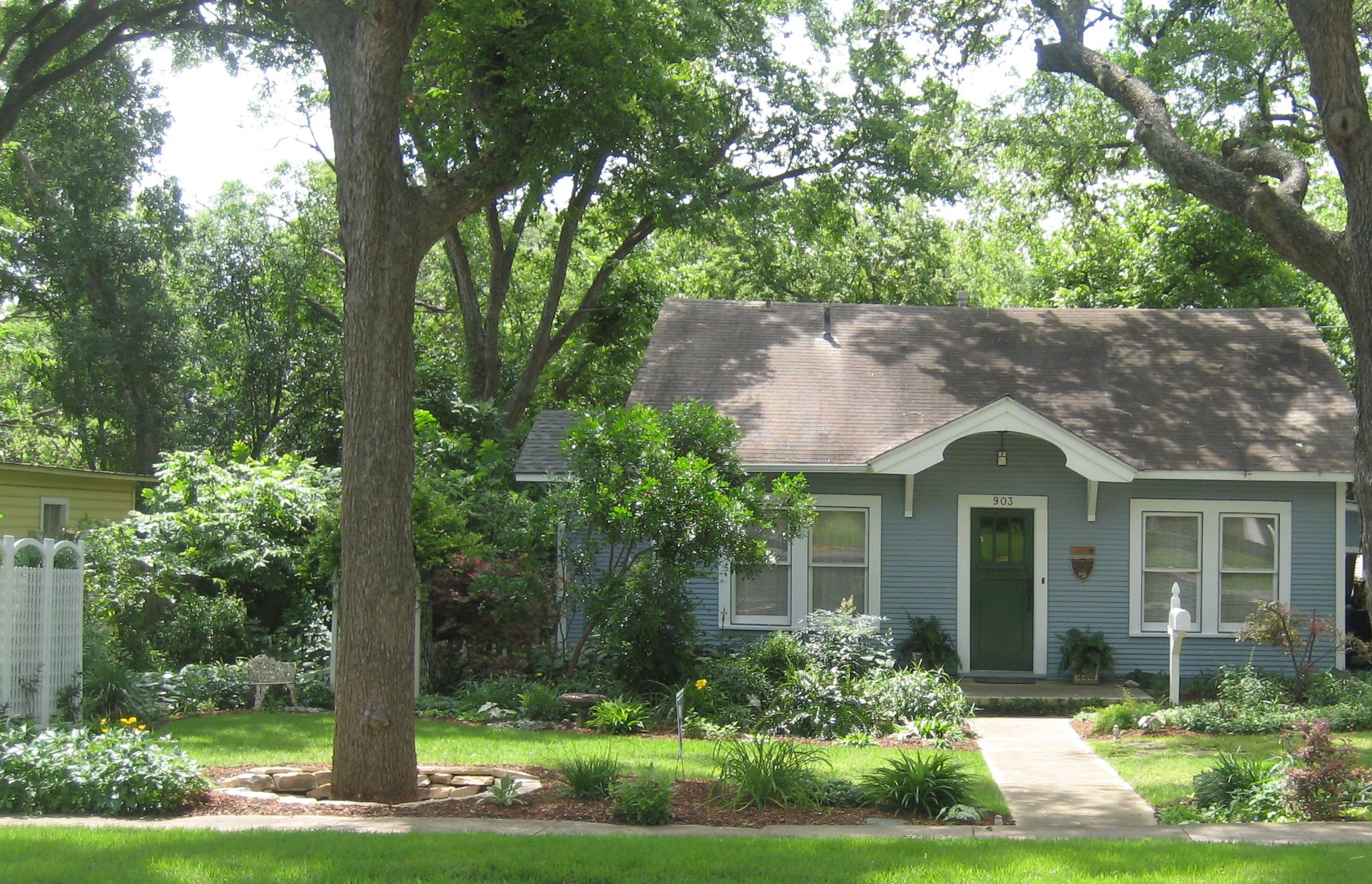
I love visiting my mom’s house in the beautiful Texas hill country.  There seems to be a peace in the hill country all its own–the many clear rivers, the luscious greenery, interesting caves and hills and canyons–the area is a treasure. My mom’s house is a treasure too, a tiny 1911 cottage with a huge yard that she has completely transformed in the twelve or so years she’s lived there.

Mom's 1911 Cottage in the Texas Hill Country

I see now that my mom is truly an artist.  She’s also a mom, and a professor, and a friend, and a colleague, and a writer, and a speaker. I respect and admire all those things about her. But one huge reason I like going to her house is to be in the middle of her artistic expression, and to feel the way it makes me feel. Engaged. Interested. Peaceful. Happy, even. Surrounded by beauty and art.

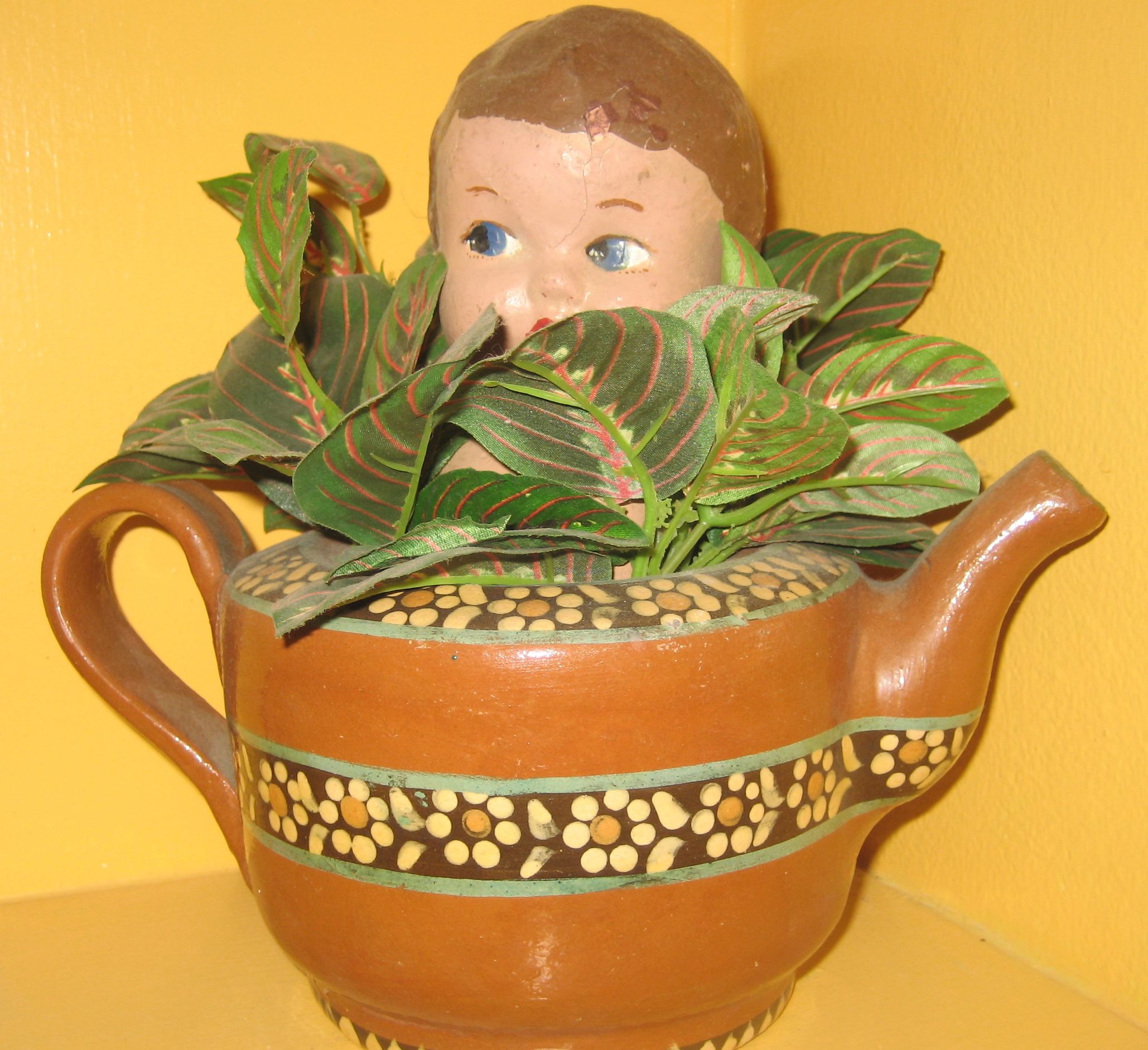
None of it is “museum art”.  You won’t be impressed with famous names or even pieces that look like they should be in a museum. Her art is truly expressive, mostly folk art and functional art. I mean, she has an antique doll head on top of a plant in a teapot.  Who does this? Well, she does, and it’s fabulous.

My Mom's Folk Art

On the long drive back to my home, I started thinking about how I feel in her house, and why I like her particular style so much. Maybe partly because she’s my mom, and I seem to have inherited her “quirky” gene. But I think it’s mainly because everything in her house feels intentional. Every beautiful or even strange object (like the doll’s head) is placed precisely where she wants it to be, with intent. This feels substantial to me, and I like it. It is artistry.

Functional art intrigues me very much because it represents the creative spirit in all of us (see Angus’ post about Art.) Shaker furniture may be the most recognized example of the best of functional art–pure beauty in its simple lines and curves, the best artistry and craftsmanship in its making, and an enduring statement about incorporating art and beauty into our daily mundane tasks. My mom has a lot of functional art in her home. The plastic cups we drink from are even artfully colorful in her exposed cabinets.

Exposed Cabinets

But there’s a reason they aren’t just plastic cups, but are instead colorful, textured, and perfect for the spot.  The reason is because she’s an artist, and her home is her canvas.

I want to grow up to be just like her.

Everything is Intentional